Integrating 3D Daisy Flower Seamless Pattern 4 into Your Sublimation Workflow
In the competitive landscape of custom merchandise, the difference between a product that sells and one that sits on a shelf often comes down to the quality and uniqueness of the design asset. For creators working with tumblers, mugs, and other cylindrical substrates, finding a graphic that offers depth without complicating the printing process is a constant challenge. The 3D Daisy Flower Seamless Pattern 4 represents a specific type of digital asset designed to bridge the gap between high-end aesthetic appeal and practical manufacturing efficiency. This isn't just a pretty picture; it is a functional component in a broader production workflow that requires careful planning, precise execution, and an understanding of how digital files translate into physical products.
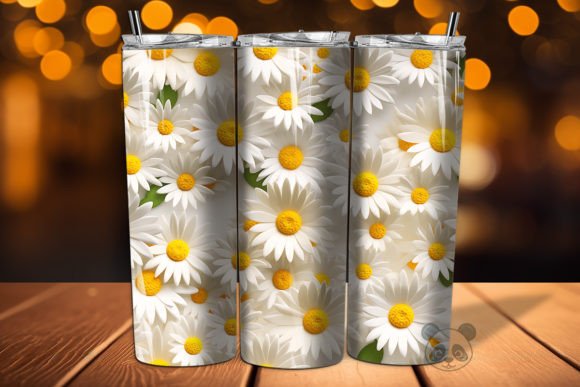
When we discuss integrating a asset like the 3D Daisy Flower Seamless Pattern 4 into a business or hobbyist routine, we are talking about more than just downloading a file. We are discussing the preparation phase of a project where consistency and quality control are paramount. This specific pattern, characterized by its three-dimensional rendering of daisy flowers, offers a visual texture that flat vector art often lacks. However, leveraging this depth requires a workflow that respects the limitations and capabilities of sublimation printing. The process begins long before the heat press is turned on; it starts with selecting the right file format and understanding the dimensional requirements of the target product.
Pre-Production Planning and Asset Verification
The first step in utilizing the 3D Daisy Flower Seamless Pattern 4 effectively is verifying the technical specifications against your project needs. In a professional setting, assuming a file will work without inspection is a recipe for wasted materials and time. The standard delivery for this type of asset is a high-resolution PNG file, typically sized around 9.3 inches by 8.2 inches at 300 DPI. While these dimensions are suitable for many standard skinny tumbler wraps, they may require adjustment depending on the specific height and circumference of the blank you are using.
Before committing to a print run, it is essential to open the file in your preferred design software—whether that be Adobe Photoshop, Illustrator, Canva, or Affinity Designer. Here, you assess the seamless nature of the pattern. A true seamless pattern allows you to tile the image horizontally without visible breaks or jagged edges. For a 20 oz skinny tumbler, which has a significant surface area, you may need to duplicate and mirror the pattern to ensure full coverage. This is where the "seamless" attribute becomes critical. If the pattern does not align perfectly when tiled, the final product will show unsightly seams that detract from the 3D illusion the design aims to create.
Furthermore, understanding the color profile is vital. Sublimation printers often operate best in CMYK or specific ICC profiles tailored to the ink and paper combination. Since the downloaded file is likely in RGB, a conversion process may be necessary to ensure the vibrant whites and greens of the daisy flowers do not shift unexpectedly during printing. This stage of the workflow is about risk mitigation. By confirming the resolution, checking the seam alignment, and managing color profiles early, you prevent costly errors later in the production line.
Design Integration and Customization Strategies
Once the base asset is verified, the next phase involves integrating the 3D Daisy Flower Seamless Pattern 4 into a complete design layout. Rarely does a raw pattern serve as the final product; it usually acts as a background or a primary visual element that interacts with other components. For instance, a small business owner might overlay a monogram, a quote, or a logo onto the floral background. The 3D nature of the daisies provides a textured look that can make simple text pop if contrasted correctly.
When layering elements, consider the visual weight of the 3D flowers. Because they possess simulated depth and shadow, they can sometimes compete with foreground text. Effective design practice suggests using semi-transparent shapes or solid color blocks behind text to ensure readability without obscuring the beauty of the pattern. Alternatively, you can use the pattern as a full-wrap background and place minimalistic branding on the front panel, allowing the Daisy Flower watercolor aesthetic to dominate the visual experience.
This asset also fits well into seasonal collections. Daisies are versatile; they evoke spring and summer but can be adapted for back-to-school promotions or general everyday carry items. By combining this pattern with different color overlays or blending modes in your software, you can create variations of the same core asset. This approach maximizes the value of a single digital download, allowing you to produce multiple distinct product lines from one source file. It is a strategy that supports efficiency, reducing the time spent sourcing new graphics while maintaining a fresh inventory.
Technical Execution: From Screen to Substrate
The transition from digital file to physical tumbler is where the theoretical meets the practical. Using the 3D Daisy Flower Seamless Pattern 4 for sublimation requires attention to the mirroring process. Since the design wraps around a cylinder, the image must be mirrored horizontally before printing so that it appears correct once applied and heated. Failure to mirror the design is a common novice error that results in reversed text or asymmetrical patterns that look unintentional.
Printing the design onto sublimation paper requires high-quality settings to capture the fine details of the 3D rendering. The shadows and highlights that give the daisies their dimension can be lost if the printer resolution is too low or if the ink saturation is incorrect. After printing, the trimming process is equally important. For a straight tumbler wrap, precision cutting ensures that the edges meet cleanly without overlapping too much, which could cause dark lines, or leaving gaps that expose the white substrate.
During the pressing phase, temperature, time, and pressure must be calibrated to the specific blank being used. The 3D effect in the print relies on the clarity of the transfer; if the press is too hot or the time too long, colors can burn or blur, flattening the perceived depth of the flowers. Conversely, under-pressing results in ghosting or faint images. Consistency here is key. Professionals often keep a log of press settings for different blanks to ensure that every time they use this specific pattern, the outcome is predictable and high-quality.
Workflow Efficiency and Long-Term Utility
Incorporating digital assets like the 3D Daisy Flower Seamless Pattern 4 into a recurring workflow offers long-term benefits for organization and scalability. Once you have established a template in your design software that accommodates the dimensions and style of this pattern, replicating the process for future orders becomes significantly faster. You can save presets for cropping, mirroring, and color adjustments, turning a complex design task into a routine operation.
Moreover, digital downloads provide immediate access, eliminating shipping delays associated with physical stencils or prints. This immediacy supports agile business models where trends change rapidly. If a customer requests a custom order featuring daisies, having this file ready in your library allows for same-day turnaround. It also facilitates better inventory management; you only print what you need, reducing waste and storage costs.
It is also worth noting the versatility of this asset beyond tumblers. While optimized for a 20 oz skinny tumbler, the seamless nature of the pattern makes it adaptable for mouse pads, tote bags, pillows, and even fabric printing. Understanding the scalability of the 300 DPI file allows you to expand your product offerings without purchasing additional designs. This cross-platform usability enhances the return on investment for the digital purchase.
Quality Control and Final Review
The final stage of the workflow involves a rigorous quality check. Before packaging the finished tumbler, inspect the wrap for any banding, color shifts, or misalignments. The 3D aspect of the daisy design should look crisp, with smooth gradients between the petals and the background. Any pixelation indicates a resolution issue that needs to be addressed in the pre-production phase. Additionally, ensure that the seam where the paper met is invisible or minimally visible, maintaining the illusion of a continuous field of flowers.
For entrepreneurs and creators, maintaining a high standard of quality control builds reputation and encourages repeat business. Using reliable assets like the 3D Daisy Flower Seamless Pattern 4 provides a strong foundation, but the human element of inspection remains irreplaceable. By treating the digital file as a critical component of a larger manufacturing process, you ensure that the final product not only looks good but performs well in the market.
In conclusion, the successful use of this sublimation design hinges on a methodical approach that values preparation, technical precision, and creative adaptation. Whether you are a freelancer looking to expand your portfolio or a small business owner streamlining production, understanding how to integrate these digital tools into your existing workflows is essential. The 3D Daisy Flower Seamless Pattern 4 is more than a download; it is a resource that, when handled with care and expertise, can elevate the quality of your custom merchandise and optimize your operational efficiency.